-
![]() Stress Control Information
Buying Stress Control at Home: What Happens Next?
Find out how to buy Stress Control at Home for yourself or as a gift, what happens after payment, how login access is set up, and when your 12-month membership begins.
-
![]() Stress Control Information
Preparing for Stress Control at Home: What to Do Before You Start
A practical guide to starting Stress Control at Home, including the Introduction sessions, preparation booklets, self-assessments and what to expect from the main course sessions.
-
![]() Stress Control Information
The Evidence Behind Stress Control: What the Research Shows
Explore the independent research behind Stress Control, including large NHS studies, comparisons with other psychological treatments and evidence of lasting benefits.
Stress Control Information
How to Get the Most Out of Stress Control at Home

Stress Control at Home gives you a lot more than the session videos. The course includes practical skills, booklets, worksheets, self-assessments, quizzes and relaxation tracks, all designed to help you understand your own stress and learn what works for you.
You do not need to use everything perfectly or try to take it all in at once. The aim is to use the different parts of the course in a way that helps you build your understanding, practise the skills and become increasingly confident in managing stress for yourself.
Think of the course as a jigsaw
Each part of Stress Control adds another piece to the picture. As you move through the course, the different ideas and skills begin to connect and build on one another.
You are the most important piece of the jigsaw. The course gives you the knowledge, tools and skills, but the real progress comes from understanding your own stress, trying things out and discovering what helps you.
This is part of what we mean when we talk about becoming your own therapist. It does not mean you are expected to manage everything alone. It means developing a better understanding of yourself and building a set of skills that you can use with increasing confidence, both during the course and in the future.
Give yourself time between sessions
We suggest working through around one or two videos each week. This gives you time to think about what you have learned, try the skills in everyday life and notice what happens when you use them.
There is no need to master one skill before moving on. Some will make sense immediately, while others may become more useful later. As the course progresses, you will see how the different skills fit together.
A useful approach: watch the session, try the skills that are suggested, then give yourself some time to use them before moving on.
Practise the skills — this is where CBT becomes useful
Stress Control is based largely on principles from Cognitive Behavioural Therapy (CBT). An important part of CBT is not simply understanding an idea, but putting it into practice and seeing what happens.
For example, learning why avoidance can keep anxiety going is useful. Trying a different response in a real situation is what gives you the chance to discover that you can cope differently.
The same applies to breathing, relaxation, changing unhelpful thinking, improving sleep, tackling avoidance and the other skills you will learn. Practice helps turn something you have understood into something you can actually use.
Use your self-assessments to track your progress
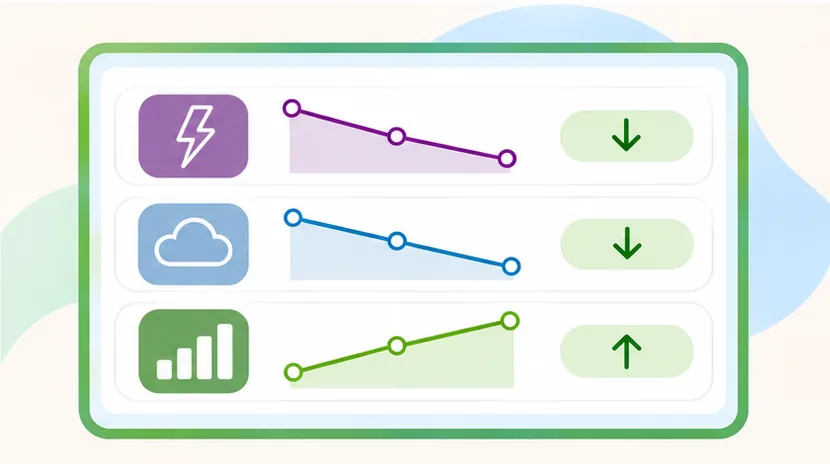
Your self-assessment questionnaires give you a way to check how things are changing as you move through the course.
You can track your anxiety, depression and wellbeing over time. You can also complete the alcohol-use questionnaire if it is relevant to you.
Your first scores give you a starting point, or baseline. We then suggest repeating the questionnaires every few weeks so you can look back and see whether things are changing as you learn and practise more Stress Control skills.
Try not to focus too much on any one score. Progress is not always a straight line, and scores can naturally move up and down depending on what is happening in your life. They are most useful as one way of seeing the bigger picture over time.
Your results are private to you. No one else can see your answers or your self-assessment scores.
Read the booklet before each session
Each session has a booklet designed to help you prepare for what you are about to learn. Reading it before watching the session can make the ideas easier to follow and gives you a chance to start thinking about how they relate to you.
You can choose between the shorter and more detailed versions of the booklets, depending on how much information you want. There are also activities to complete before and after sessions, which you can work through on paper or using the online worksheets.
You do not have to remember everything. The booklets are there to support you throughout the course, and you can return to them whenever you want a reminder of a particular idea or skill.
Find the relaxation style that works for you
Stress Control includes several different ways to help you calm your body and reduce physical tension, including belly breathing, progressive muscle relaxation and mindfulness.
You will also find different versions of the relaxation tracks. Some have a spoken voice only, some include background music, and there are music-only options too. The guided tracks are available with Dr Jim White and Dr Ruth Jamieson.
There is no single version that works best for everyone. Some people prefer a voice to guide them, while others find music or a quieter approach more relaxing. Try the different options and see what feels most comfortable and useful for you.
Give it some practice. Relaxation is a skill, and it often becomes easier and more effective the more familiar it becomes.
Use the worksheets to make the course personal
The worksheets are there to help you connect what you are learning with your own experiences. They are not tests, and there are no right or wrong answers.
Some are designed to help you notice patterns, some help you practise a particular skill, and others let you monitor something over time. The aim is to make the course more useful to you, rather than keeping the ideas general.
Different worksheets have different purposes. You may only need to complete some once, while others are more useful when repeated as you practise a skill or track a pattern.
Checklists
Checklists can help you recognise signs, habits or patterns that may be relevant to your stress. These are usually something you complete once to build your understanding.
Practice forms
Practice forms are designed to be used while you are learning a particular technique. Repeating them can help you become more confident using the skill in real situations.
Diaries
Diaries can help you monitor things over time and notice patterns that are difficult to spot from memory alone. You can use them for as long as they are useful to you.
Your worksheet answers are private to you, so you can use them honestly and focus on what is most helpful for your own progress.
Use the quizzes as a quick recap
The short quizzes at the end of sessions are another way to reinforce what you have learned.
They are not exams and there is no pass or fail. They simply give you a chance to check what has stuck, revisit anything you are unsure about and remind yourself of the main points before you move on.
Go back to the parts that help you most
Once you have completed a session, you can return to its videos and resources whenever you need them.
As you work through the course, you may find that certain techniques, booklets, worksheets or relaxation tracks become particularly useful to you. These can gradually become your own set of go-to resources.
Build your own set of go-to resources. Part of using Stress Control well is knowing where to go back to when you want a reminder or need a particular skill again.
Keep going through the whole course
Different parts of Stress Control are designed to work together, so it is worth continuing through all 12 sessions even if some topics feel more relevant to you than others.
You will learn ways to manage the physical effects of stress, work with unhelpful thoughts and behaviours, tackle panic, improve sleep and strengthen your wellbeing. Later sessions also help you think about how to keep using what you have learned in the future.
You may find that a skill you did not expect to be particularly important becomes useful later, once you can see how it connects with the rest of the course.
Use your membership flexibly
Your Stress Control at Home membership gives you 12 months of access, so you have plenty of time to work through the programme and return to completed material.
If you need to take a break, you can pause your membership once for up to 30 days. If you need longer, you can also extend your access.
You can manage these options through My Account in the top menu when you are logged in.
There is no benefit in rushing. Use the time you have to work through the course properly, practise the skills and return to anything that is particularly useful to you.
Keep using the skills after the course
The aim of Stress Control is not simply to help while you are working through the sessions. It is to give you skills and understanding that you can continue using afterwards.
Life will still bring stress, difficult periods and setbacks. The difference is that you can become better at recognising what is happening, responding earlier and choosing from a range of strategies rather than feeling that stress is simply taking over.
This is what becoming your own therapist is really about: understanding yourself better, recognising patterns and having practical skills you know how to use.
Over time, that can help you feel more confident in your ability to tackle problems, reduce patterns such as avoidance or excessive worry, and take a more active role in looking after your mental health and wellbeing.
Ready to continue?
If you are already a Stress Control at Home member, log in and continue from where you left off. You do not need to do everything at once — just keep building the picture one piece at a time.
Not a member yet?
Find out what is included in Stress Control at Home, or get started when you are ready.


